Zero-Click Searches: How to Prove Marketing ROI When Nobody Clicks Through
What’s in this article
- Zero-click searches can still deliver business value, as users may see and remember a brand through search results, featured snippets and AI-generated summaries without visiting its website.
SWL - Traditional SEO metrics are no longer enough, making AI visibility, brand mentions, share of answer and branded search volume useful additional performance indicators.
SWL - Brand visibility can influence future conversions, as repeated exposure across search engines, AI platforms and social channels builds familiarity and trust.
SWL - Businesses should maximise value from website visitors, improving page speed, user experience, calls to action and trust signals to encourage enquiries and sales.
SWL - ROI measurement should extend beyond clicks, considering assisted conversions, customer value and brand recognition to better understand the impact of search visibility.
Imagine this scenario: someone types “how long should I rest a steak” into Google. The answer appears at the top of the page, neatly summed up. They read it, close the tab, and head to the kitchen. Your website wrote that answer. You get no visit, no click, and nothing in your analytics to show for it.
Zero-click searches are happening billions of times a day, and it’s changing how marketers need to think about success. If you’re unfamiliar with this online marketing tool, we can help.
This blog explains how to measure marketing ROI from zero-click searches using impressions, brand searches, calls, and leads, enabling your business to reach more customers.
Zero Click Search Defined
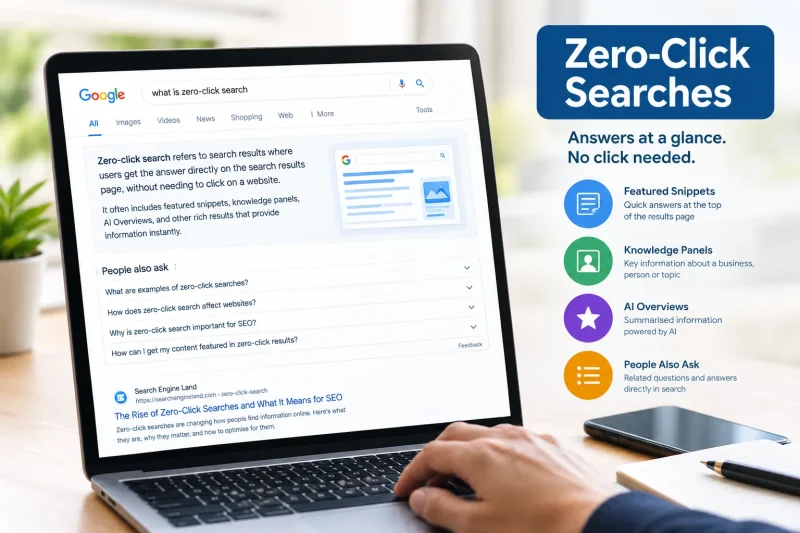
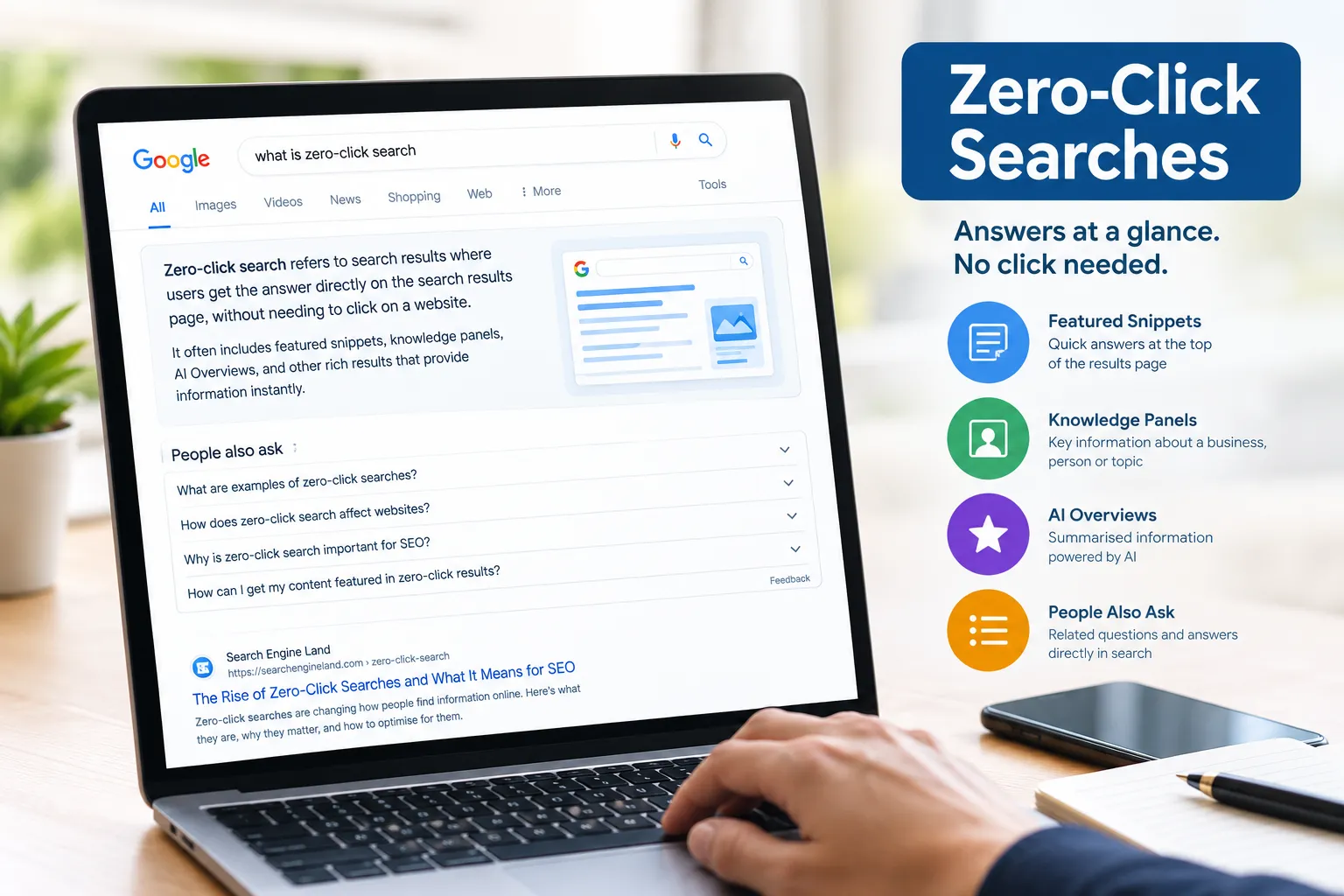
So, what is zero click search? It’s a search that ends without the person clicking on any result. The answer shows up directly on the results page, in an AI Overview, a highlighted answer box, a map listing, or a “People also ask” panel.
If you’re wondering what are zero click searches in everyday life, think about checking the weather, a shop’s opening hours, a sports score, or a phone number. The search did its job. The user received the information he was looking for without visiting your website.
How Common Are Google Zero Click Searches?
Google zero click searches are now the norm rather than the exception. A 2026 study by SparkToro, based on Similarweb data, found that 68% of US Google searches between January and April 2026 ended without clicking on any website. This trend increased approximately 60% in 2024. In other words, fewer than one in three searches now sends a visitor anywhere.
The study didn’t include searches made through the Google mobile app, so the real figure is likely higher. SparkToro also points to AI Overviews as a probable reason for the jump.
For anyone who has spent years using website traffic as the main proof that marketing works, that’s a serious problem. If your brand is being seen more often but clicked less, a report built only on clicks can be misleading.
What Is Zero Click Marketing?
What is zero click marketing? It’s the practice of giving people real value right where they already are, whether that’s a search results page, an AI answer, or a social feed without clicking on your website. The aim is simple: be the name people see, trust, and remember, so you become their first option when they’re ready to buy.
This shift also exposes a misconception that marketers have quietly known for years: clicks were never an accurate measure of marketing success. Although a click tells you someone visited your website, it doesn’t mean they purchased anything. Most people see a brand several times before they act.
Think of a search result that shows your business name, a clear answer, a five-star rating, and your phone number. That result is doing real work and resonates deeply with customers even when they never visited your site. It’s a lot like a billboard on a busy road: nobody judges it by how many drivers pulled over to touch it.
So the better question isn’t “How many people clicked?” It’s “Did people see us, remember us, and eventually choose us?” Changing your long-term perspective can be a game-changer for your business.
How to Prove ROI When Nobody Clicks
The good news is that you can launch an effective online marketing strategy without depending heavily on clicks. Here are six measures worth tracking:
- Impressions: Google Search Console, a free tool, shows how often your pages appear in search results. Rising impressions with flat clicks usually means more people are seeing you, not fewer.
- Searches for your brand name: When people search for your business by name, it’s a sign they retained your earlier visibility. Search Console and Google Trends both show this over time.
- Calls, directions and messages: Your Google Business Profile records how many people called you, asked for directions, or visited your website straight from the results page.
- “How did you hear about us?” Add this question to enquiry forms and checkout pages, and ask it on the phone. The answers often reveal search and AI tools that analytics can’t assess.
- Mentions in AI answers: Once a month, ask ChatGPT, Gemini and Google’s AI Overviews the questions your customers ask. Record whether your brand appears and how it’s described.
- Sales over time: Put your visibility figures side by side with enquiries and revenue, month by month. Look for patterns over quarters rather than weeks.
When you report back, tell it as a story. For example: “We appeared in search far more often this quarter, more people searched for us by name, and enquiries followed.” That’s a clearer picture of value than a traffic chart on its own.
Need help with your website?
At Heart Digital, our team have extensive experience designing, building and optimising websites to help local business grow and succeed online. Get in touch to discuss how we can help you.
Zero Click SEO: Winning the Answer, Not Just the Visit
Zero click SEO means shaping your content so the answer Google shows comes from you and carries your name. A few habits make a real difference:
- Answer common questions clearly in the first sentence or two of a page.
- Use plain headings that match the way people actually ask questions.
- Keep your Google Business Profile complete, with current hours, photos and fresh reviews.
- Add behind-the-scenes labels to your pages (known as structured data) so Google can easily recognise prices, reviews, and FAQs.
- Mention your brand name naturally in your content, so even a summary carries it.
If you work with an agency, ask how their SEO services measure success beyond website traffic. A good partner will use a comprehensive marketing strategy and report on visibility, brand searches, calls, and leads, not just visits.
The Bottom Line
Zero-click searches aren’t the end of SEO. They’re the end of using clicks as the only standard for online marketing and visibility. People are still searching, still reading, and still choosing businesses. They’re simply doing more of it without leaving the results page. The brands that measure what really matters and show up clearly where those answers appear always stand out from the competition and make a meaningful impact on their customers.
At Heart Digital, we can help your business use zero-click searches to increase visibility and deliver tangible results. Book an appointment today to discuss your vision, make a difference for your customers, and gain a competitive advantage.
Frequently Asked Questions (FAQs)
Are zero-click searches bad for businesses?
Although zero-click searches reduce website visits, your brand can still be seen, trusted, and remembered. A business that appears in the answer with its name, rating, and phone number can dominate calls and sales without anyone clicking through.
Is SEO still worth investing in?
Google still sends a huge amount of traffic, and appearing in AI answers and highlighted results relies on the same groundwork: helpful content, a well-built website, and a strong local profile. Leveraging SEO and zero-click searches enables businesses to increase market reach and drive real results.
What free tools can measure zero-click visibility?
The following tools can measure zero-click visibility:
- Google Search Console: This tool shows impressions and brand-name searches.
- Google Business Profile: This tool tracks calls and direction requests.
- Google Trends: This tool shows interest in your brand over time.
- Regular manual checks of ChatGPT and AI Overviews: This strategy reveals whether you’re being mentioned in AI enquiries.
How do I get my content into Google’s answer boxes?
Answer the question clearly in the first sentence or two in plain language. Use headings that match how people phrase questions, keep information accurate and current, and make sure your page loads quickly and is easy for Google to read.
How long before I see results?
Changes in impressions often show within a few months. Shifts in brand searches and enquiries usually take longer, often three to six months. Track trends across quarters rather than weeks so normal ups and downs don’t send you in the wrong direction.
Articles
Related Articles
We’re passionate about our work and the industry in which we work. We therefore regularly public
digital marketing updates for the benefits of our clients and the broader public.