What the Rise of AI Shopping Assistants Means for Ecommerce Advertisers
What’s in this article
- AI shopping assistants are changing how consumers search for products, compare options and make purchasing decisions.
- They provide personalised recommendations based on shoppers’ needs, preferences and browsing behaviour.
- Ecommerce businesses need clear, accurate and structured product information to improve visibility in AI-powered shopping experiences.
- Product descriptions, reviews, pricing and availability can influence how AI assistants recommend products.
- Businesses should adapt their SEO and ecommerce strategies to remain visible as AI-driven shopping becomes more common.
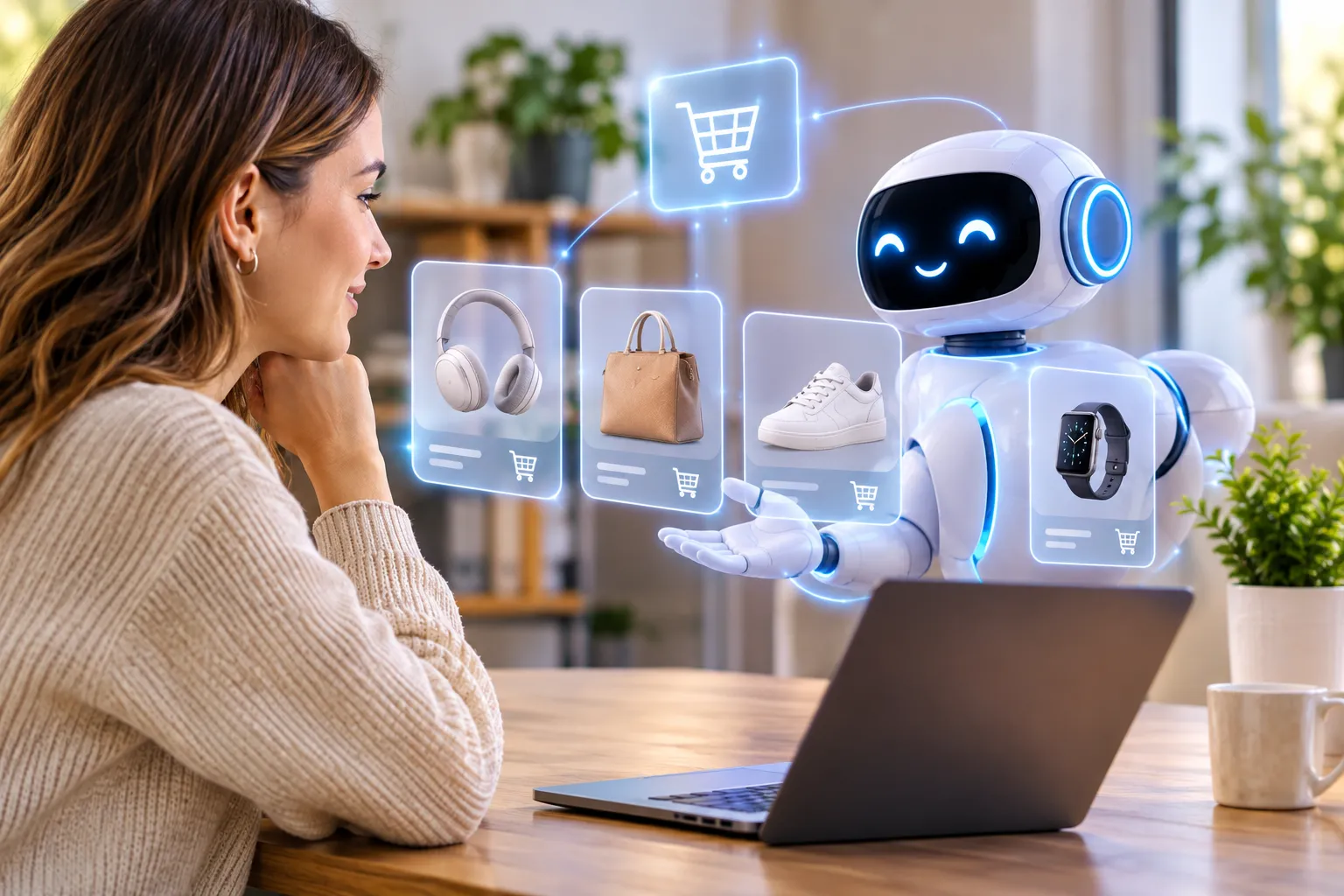
Imagine a shopper who needs new running shoes. A few years ago, they would type a search, scroll past a row of sponsored listings, and open half a dozen tabs. Today, many simply ask an AI assistant: “Find me cushioned running shoes under $200 that suit flat feet.” Seconds later, they have three suggestions, a short explanation of each, and a link to buy the sneakers.
That small behaviour change is rapidly reshaping online advertising. When an assistant does the browsing, comparing and shortlisting, the path from “I need something” to “I bought it” looks very different. For ecommerce advertisers, it raises a big question. How do you reach a customer when artificial intelligence is doing the heavy lifting?
As reputable digital marketers with nearly 15 years of experience helping clients scale their growing businesses, we can help you achieve this goal. This blog explains what the rise of AI shopping assistants means for ecommerce advertisers, enabling you to make informed long-term decisions for your business.
From Search Box to Shopping Helper
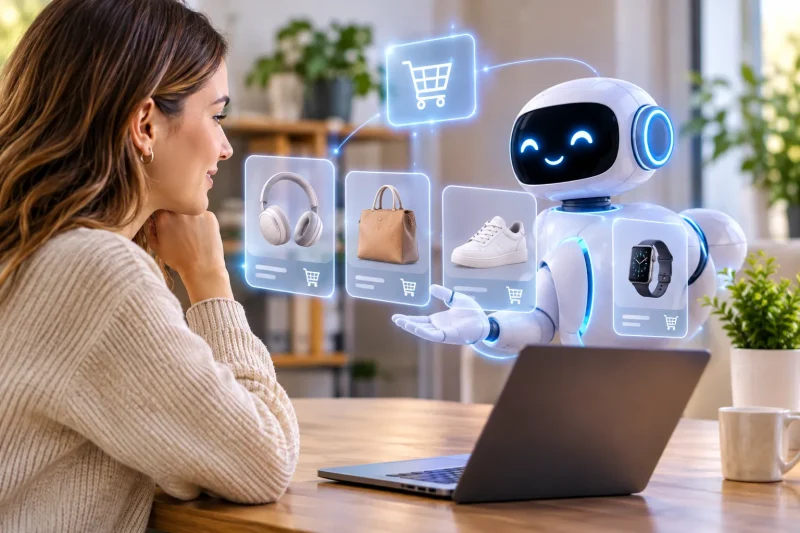
AI shopping assistants are tools such as ChatGPT, Google Gemini, Perplexity and Amazon’s Rufus that answer shopping questions in everyday conversation. Instead of handing over a list of links, they read product pages, reviews, and prices, then recommend several options.
The newest versions go a step further. Often called agentic AI for ecommerce, they can act on a shopper’s behalf: tracking a price, filling a cart or completing a checkout once the shopper approves its choices.
This isn’t a fringe habit any more. Adobe’s analysis of more than one trillion visits to US retail sites discovered that traffic from generative AI tools jumped 693% during the 2025 holiday season compared to that of 2024. More impressively, those visitors converted 31% more often than shoppers arriving from other sources. They also stayed longer and viewed more pages. These trends represent a massive shift in modern ecommerce advertising.
Remember, people who arrive via an assistant have usually done their homework. They visit ecommerce websites ready to buy.
Why the Old Advertising Playbook Is Under Pressure
For two decades, online retail advertising has followed a familiar pattern. You bid on keywords, rank high on search engine results, and hope a shopper clicks. Clever headlines, eye-catching images, and well-timed discounts did much of the heavy lifting. However, the rise of artificial intelligence has changed the ecommerce advertising landscape drastically.
AI assistants change the rules in three important ways.
- Fewer clicks along the way: When an assistant compares ten products for the shopper, many of the in-between visits that manifest in website traffic reports never happen. The shopper may only land on your site at the very end, ready to pay.
- The assistant becomes the first audience: Before a person sees your product, software has to understand it. Remember, an AI assistant can’t be charmed by a slogan. It looks for clear facts: size, materials, price, stock levels, delivery times and what real customers say.
- Less room for ads: A conversation leaves less space for paid placements than a page full of results. Shorter answers mean tougher competition for the spots that remain.
Low-Cost Christmas Marketing Campaign Ideas
Some of the best Christmas marketing campaigns don’t stretch your budget. They share a clear message and a genuine reason for customers to act. Here are a few Christmas marketing campaign ideas that suit a tight budget:
- Email your existing customers: They already know and trust you, and email costs almost nothing to send. Plan a short series: a gift guide, an early-bird offer, a delivery deadline reminder, and a last-minute gift card push.
- Build a 12 Days of Christmas countdown: Feature a different product, tip, or offer during your 12-day Christmas countdown, giving your customers a compelling reason to check back.
- Feature your staff: Behind-the-scenes photos of your team wrapping orders or decorating the shop are relatable and often outperform polished ads. Best of all, they cost nothing.
- Collaborate with a local business: A cafe, florist, gym or a health food store can run a joint giveaway or bundle. You share the cost and reach each other’s customers during your Yuletide collaboration.
- Sell gift cards: They’re perfect for last-minute shoppers, require no shipping, and attract new customers in January.
- Give back: A small donation from every sale to a local charity gives customers another reason to choose your business over a big chain.
What Ecommerce Advertisers Should Do Now
The rise of AI shopping assistants requires creative solutions to reach customers, optimise product visibility, reach more shoppers, and boost conversions. As an ecommerce advertiser, consider the following strategies:
- Clean up your product data: Your product feed is now one of your most important ads. Ensure that every listing has an accurate title, a full description, correct prices, stock levels, sizes, colours, and shipping details. Gaps and errors make it harder for ecommerce AI agents to recommend your products or services.
- Write for questions, not just keywords: Shoppers ask assistants questions such as “Is this jacket warm enough for Melbourne winters?” Product pages and FAQs that answer real questions in plain language give assistants something useful to quote.
- Treat reviews as advertising: Assistants rely heavily on customer feedback. Encourage honest reviews, respond to complaints, and fix the problems they identify. A steady stream of detailed, recent reviews is hard for a competitor to copy.
- Make your site easy for software to read: Structured data (behind-the-scenes code that labels prices, ratings, and availability) helps machines understand your pages. Fast load times and a simple checkout matter, too, especially as assistants begin completing purchases themselves.
- Test the new ad formats early: Google, Microsoft, Amazon, and OpenAI are all experimenting with ads inside AI answers. Early testers usually pay less and learn more while competition is still thin.
- Rethink how you measure success: If AI assistants remove the browsing stage, you’ll see fewer clicks but stronger sales from the clicks you do get. Judge campaigns on revenue and profit, not traffic alone.
Need help with your website?
At Heart Digital, our team have extensive experience designing, building and optimising websites to help local business grow and succeed online. Get in touch to discuss how we can help you.
Put AI Agents to Work on Your Own Store
The shift isn’t only something happening to retailers. It’s also a tool they can use. AI agents for ecommerce can now answer customer questions around the clock, suggest the right size, recommend matching products, and help shoppers find what they need without navigating menus for hours.
Behind the scenes, ecommerce agentic AI can take on routine advertising tasks, too. It can adjust bids, flag products that are about to sell out, and spot campaigns that are wasting money, allowing you and your team to focus more on strategic and creative work.
The key is to keep a person in charge. Give these tools clear limits, check their decisions regularly, and intervene when something looks suspicious. Used carefully, they help a small team keep pace with much larger competitors.
The Takeaway for Advertisers
AI shopping assistants won’t make advertising disappear, but they are changing who you need to impress first. Before your product reaches a person, it now has to win over software that cares about facts, value, and proof.
That strategy actually rewards the retailers who do the fundamentals well. Accurate product information, honest reviews, fair prices, and a smooth checkout have always mattered. Today, they also decide whether an assistant puts your product on its shortlist at all.
The brands that stand out won’t necessarily have the biggest budgets. They’re the businesses that make their products easy to understand, trust, and purchase. They’ll also test new ad formats early before costs rise.
Always start small. Pick your top 20 products, clean up their listings, and ask an AI assistant to recommend something in your category. If your brand doesn’t appear, you know where to focus next.
Need help with your eCommerce SEO? Whether you’re launching a new brand or looking to improve the profitability of an established online store, our professional SEO services and Google Ads management services will help you.
Frequently Asked Questions (FAQs)
What is an AI shopping assistant?
An AI shopping assistant is a tool that helps people shop through conversation. Shoppers describe what they want, and the assistant compares products, prices, and reviews, then suggests a few options. Some can also track prices or complete a purchase with the shopper’s approval.
Will AI shopping assistants replace Google Ads and other paid search?
Not entirely, at least not soon. Traditional search still drives a huge share of online sales. However, budgets are likely to shift gradually as more shoppers start their research with assistants and new ad formats appear inside AI answers.
How do AI assistants decide which products to recommend?
They evaluate product listings, website content, customer reviews, prices, stock levels, and trusted third-party sources. Products with complete, accurate information and strong recent reviews tend to be easier for an assistant to recommend with confidence.
Can small online stores compete in AI shopping results?
Small online stores can compete in AI shopping results. Assistants focus on how well a product matches a shopper’s request, not just on brand size or ad spend. A small store with detailed listings, helpful product pages, and genuine reviews can appear alongside much bigger names.
How can I tell if AI assistants are sending traffic to my store?
Check your analytics for visits referred by sites such as chatgpt.com, perplexity.ai, and gemini.google.com. You can also ask assistants questions about your product category and note whether your brand appears in their answers.
Articles
Related Articles
We’re passionate about our work and the industry in which we work. We therefore regularly public
digital marketing updates for the benefits of our clients and the broader public.